
India’s GCC Outlook for 2026: A Year of Measured, High-Quality Growth
As India enters 2026, the GCC ecosystem does so from a position of scale and maturity. The rapid expansion phase is largely behind us. What lies ahead is a more disciplined phase — shaped by deeper mandates, selective new entries, and sustained expansion of existing centres.
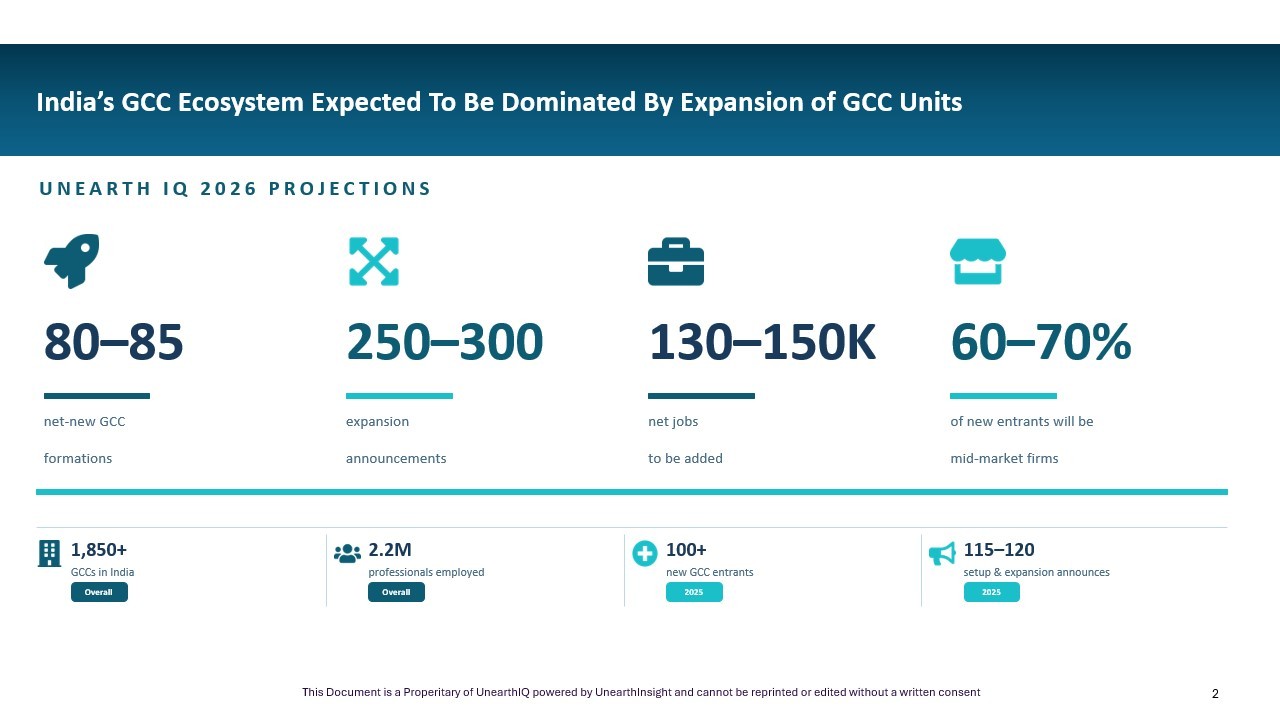
India today hosts 1,850+ GCCs employing close to 2.2 million professionals. In 2025, the ecosystem added 100+ new GCC entrants alongside 115-120 expansion announcements, reinforcing India’s role as the global hub for captive technology, digital, and engineering operations.
New GCC Entrants Will Moderate
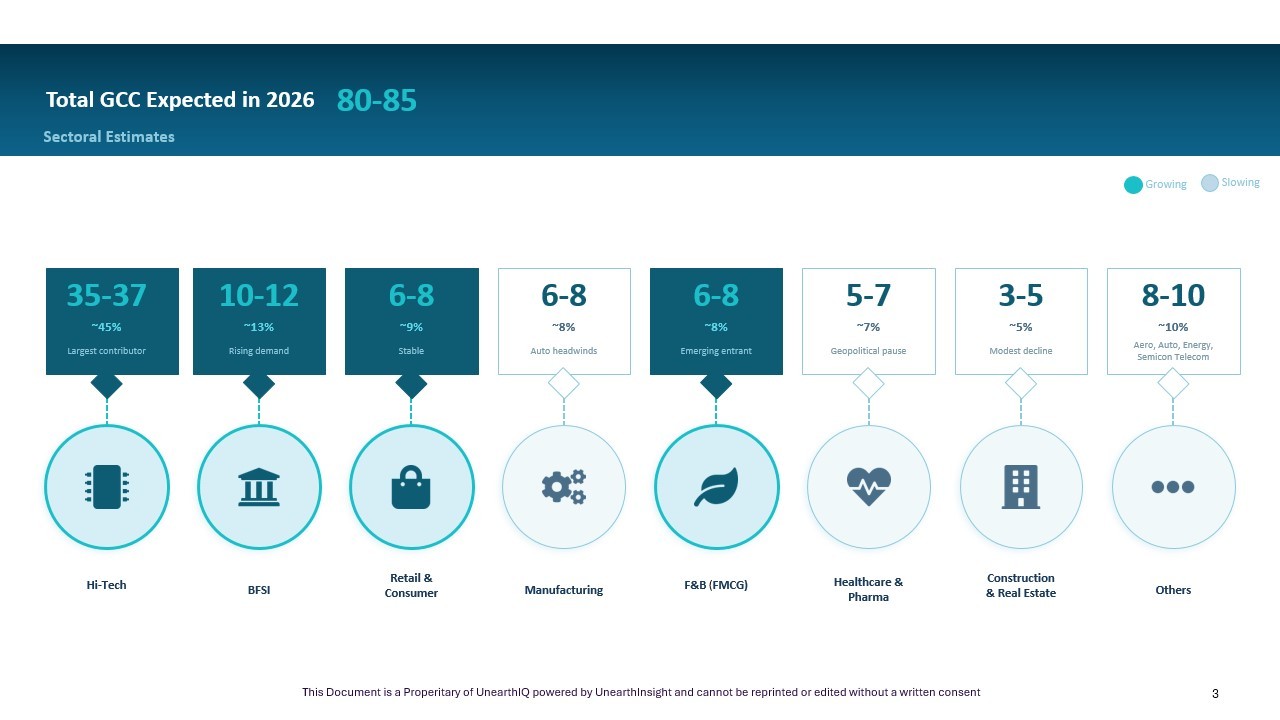
Net new GCC formations are expected to soften to approximately 80–85 in 2026, down from around 100 in 2025. Large enterprises, particularly Fortune 500 firms, are taking longer decision cycles amid global economic reviews, capital allocation scrutiny, and operating model reassessments. The focus is shifting from speed of entry to quality, structure, and long-term sustainability.
The first quarter of 2026 is likely to be comparatively slower, as geopolitical uncertainty, including US tariff policy, the ongoing conflict in West Asia, and US-China tensions, has prompted many large multinationals to pause or extend their evaluation timelines. New GCC announcements are expected to pick up through the second half of the year as macro clarity improves.
Expansions Will Drive Headcount Growth
While new formations slow, the more meaningful story in 2026 is expansion. With 250–300 expansion expected, existing GCCs will be the primary engine of talent addition and capability deepening. Net job additions are estimated at 130,000 to 150,000, driven largely by expansions rather than greenfield setups. This further cements GCCs as the primary engine of tech and digital employment growth in India.
Sectors to Watch: Where Growth Is Coming From
Hi-Tech remains the largest contributor — software firms using India for product engineering, AI, and data capabilities.
Enterprise software product companies are a growing cohort, setting up engineering centres for SaaS and B2B platforms.
BFSI continues to expand across data platforms, risk, compliance, and core modernisation.
Travel, hospitality, and F&B are emerging entrants, leveraging India for technology, analytics, and customer experience.
Sectors Facing Headwinds
Pharma and healthcare setups are expected to slow — West Asia tensions are disrupting supply chains, while US reshoring policies are making multinationals more cautious about offshore commitments.
Automotive is under pressure from slowing EV growth, US-China trade tensions, and cost strain on German majors historically active in India.
Industrial and manufacturing-linked sectors remain hesitant amid tariff volatility and supply chain fragmentation.
Mid-Market and PE-Backed Firms Will Lead New Formations
60–70% of new entrants are expected to be mid-market firms rather than Fortune 500 enterprises.
Over 610 PE-backed GCCs were operating in India by late 2025- firms like KKR, Blackstone, and Warburg Pincus are directing portfolio companies to India as a value creation lever.
Boutique and specialist firms — focused operations of 50–200 people built around a single capability — will add to formations quietly but meaningfully.
UnearthIQ View
2026 will be defined less by headline expansion and more by depth of execution. While the pace of new center creation may moderate, existing GCCs will drive the bulk of talent addition, capability expansion, and strategic ownership. India’s GCC ecosystem has moved beyond entry and scale. The next phase is about durability, accountability, and long-term value creation, with India firmly positioned as a core operating and decision-making hub for global enterprises